Just to kick things off, I am not an expert when it comes to politics, nor will I ever claim to be. That said, at the "political party showoff" I think the student body may have jumped a bit too quickly at the Libertarian Representative's political beliefs. I'll admit that a great deal of the ideas seem quite odd; no taxes, the right to bare arms and the general freedom to do whatever we please, but the platform of the Libertarians to essentially dispose of the government entirely may not be as ridiculous as we think. In fact, there are a few key figures who would even agree with this stance...
"No man's life, liberty, or property are safe while legislature is in session."
- Mark Twain
"A wise and frugal government which shall restrain men from injuring one another, which shall leave the otherwise free to regulate their own pursuits of industry and improvement, and shall not take from the mouth of the labor the bread it has earned. This is the sum of good government." - Thomas Jefferson
"A government which robs Peter to pay Paul, can always count on the support of Paul"
- George Bernard Shaw
"Government is not reason; it is not eloquence; it is force. Like fire, it is a dangerous servant and a fearful master."
- George Washington
Remember democracy never lasts long. It soon wastes, exhausts, and murders itself. There never was a democracy yet that did not commit suicide."
- John Adams
"The more corrupt the state, the more it legislates."
- Cornelius Tacitus
All of the above statements reflect a quite Libertarian way of thinking, either by dismissing the government due to corruption or encouraging the freedom of the individual. Now not all of these names may be familiar, but for me personally the two that stuck out the most (after Mark Twain of course) were none other than Thomas Jefferson and George Washington... past Presidents of the United States. It really is quite interesting how the first leaders in North America can speak against the foundations of the very government they run. John Adams is non-other than the 2nd President of the United States and he's essentially saying his government is doomed to fail (or perhaps already had).
If you take a minute to theoretically picture a Libertarian government, one maximizing the freedoms of the hardworking individuals and minimizing the governments power over them, it doesn't seem so bad. In fact such a view of the world would actually be optimistic of human nature. I mean the assumption made by such a government relies solely on the belief that human beings are inherently "good" and therefore they can not only survive, but thrive in harmony when unburdened by government.
Personally, I believe that this idea is similar to Communism only in the matter that it looks fantastic on paper, but doesn't necessarily work in practice. It's a great view to have, but I'm not necessarily sure that our wants can mesh perfectly with one another without any flaws. Could a hunter and an animal rights activist really ever see eye-to-eye? (random example I know) Although corrupt at times, government provides a bit of security where otherwise we would all be left to fend for ourselves.
This is just my opinion. After all, this view has apparently become much more mainstream in the United States in recent years. My point is that we shouldn't be so quick to dismiss a new perspective just because it's different than our own. In fact by allowing the consideration of new ideas we can build on our thoughts; picking and choosing what makes the most sense opposed to blindly believing a singular idea out of ignorance. In terms of political parties, I don't really believe there is any one party that has all the answers. There are weakness to each and that's why we have many parties in legislature, so they may cover the weaknesses of one another. No party is perfect, so there is always room for improvement, which is only done by allowing new ideas to have a chance to shine.
You don't necessarily have to agree with a radically different line of thought (Libertarianism for instance), but you should at least honour it with some consideration.
Never stop questioning.
Tuesday, 3 May 2011

Rhetoric in Action
Taking a brief break from the analysis of happiness, our school recently had what we informally called a "show-off" period, featuring the various political candidates running in the current election. Earlier in the year we learned that the key to any successful presentation (literary work or in general anything aimed to prove a point) is the use of Ethos, Logos and Pathos.
Quickly, any effective argument is all about targeting your opponent and the above three elements of rhetoric accomplish precisely that. First is Ethos, which is used to demonstrate to the audience the character of the speaker. It appeals to the audience so they are aware the presenter knows precisely what he is talking about and therefore becomes willing to trust their argument. Next up is Logos. This is plainly and simply a presentation of the facts with evidence to prove the point. The last weapon of rhetoric is Pathos. This is a part of the argument targeting the audience emotionally to convey their argument. Often in the form of some sort of story or analogy, but not necessarily.
This image best describes the elements of rhetoric (think in terms of a debate). Ethos targets the heart of the opponent by revealing the character of the speaker. Logos attacks the head (i.e. logic) utilizing supported evidence and Pathos goes straight to the gonads (attacking the pride of the individual through an appeal to the emotions). An effective master of rhetoric knows precisely when he/she is using any of these elements and often in debate it's not the better point that wins, but the one that is argued most effectively.
"That's the beauty of argument, if you argue correctly, you're never wrong." - Nick Naylor
Anyways, it was interesting to analyze several presenters back-to-back, not only judging their effectiveness personally, but also seeing the crowd's reaction and even responses to one another.
The Libertarian representative you could tell was a little inexperienced, which isn't her fault, but though her introductory and conclusions were strong in my opinion, as people pointed out, it was pretty much read from paper. When it came to student questions she seemed a little uncertain. Issues quite pertinent to us as students (i.e. lowering cost of college/university) she didn't seem prepared for, when she likely could have voiced her position a little better.
Personally, I believe the Liberal Party was one of the best represented. He was bold, straight to the point and confident, although perhaps a tad impersonal. Interestingly enough, what Baker pointed out was he had an odd mannerism to finish a number of negative statements with "quite honestly". Exp. "The cost of university is just going to increase, quite honestly." He used it as if the suffix created by using those two words would soften the blow of any negative statement he put forth. I'm a little embarrassed to say that I didn't catch on to it because details are crucial when analyzing any argument.
The Green Party was interesting by opening with a clear use of Pathos in his "Trying to find a rhinoceros" story. It was a little hard to follow, but he managed to tie it back to his party by relating it to the environment issues also being large, but often remain unseen (in a nutshell). He had a great intro. by choosing to stand because it was different and felt much more personal. On the other hand his "green initiative" (arguably the whole aim of his party) fell largely on deaf ears as all of the parties mentioned some form of green movement. Also, this is just my personal opinion, but between talks he just seemed bored, which took a lot away from his position.
Bev Oda... yeah. Experienced politician no doubt, but she has the ability to talk a great deal without really saying anything. I mean she said the Conservative Party had many specific ideas to create change, however only mentioned two. Maybe it's just me, but whenever she said that I thought "Alright... well what are they?" As for the "not" issue, part of me wishes it wasn't asked because it ate up valuable question time, but at the same time I'm glad that it raised awareness for anyone who didn't know what happened.
I'm not going to get into it in detail. Her answer was nothing unexpected and, as the NDP representative pointed out, it was likely the product of several months spinning the issue.
The NDP were fairly well represented although perhaps appearing slightly less confident and professional than their Conservative and Liberal counterparts.
Though these talks are great for comparing the ideals of the various parties, but I don't believe that a demonstration like this is what one person should base their vote completely upon. I had the opportunity to speak to both the NDP and Liberal representatives on matters I was perplexed with and surprisingly enough the NDP rep. was quite knowledgeable, while the Liberal rep. was much more personal (despite stating the contrary to both above). In the end, this demonstration should merely spark an interest in certain parties so one may further investigate their respected platforms. One person's word isn't enough to critique an entire political party for the worse or even for the better.
Yes, it is crucial for anyone with the right to vote to make use of it. I'm a firm believer that if you willingly choose not to be a part of the political process you withdraw all right to complain about it. At the same time, your decision shouldn't be the product of "eenie meanie minie mo", but by making an informed decision about who should truly be running our country. A random vote is as useless as a blank one.
Never stop questioning.
Quickly, any effective argument is all about targeting your opponent and the above three elements of rhetoric accomplish precisely that. First is Ethos, which is used to demonstrate to the audience the character of the speaker. It appeals to the audience so they are aware the presenter knows precisely what he is talking about and therefore becomes willing to trust their argument. Next up is Logos. This is plainly and simply a presentation of the facts with evidence to prove the point. The last weapon of rhetoric is Pathos. This is a part of the argument targeting the audience emotionally to convey their argument. Often in the form of some sort of story or analogy, but not necessarily.
 |
| Why use a fancy photoshop program when you can use Paint? |
This image best describes the elements of rhetoric (think in terms of a debate). Ethos targets the heart of the opponent by revealing the character of the speaker. Logos attacks the head (i.e. logic) utilizing supported evidence and Pathos goes straight to the gonads (attacking the pride of the individual through an appeal to the emotions). An effective master of rhetoric knows precisely when he/she is using any of these elements and often in debate it's not the better point that wins, but the one that is argued most effectively.
"That's the beauty of argument, if you argue correctly, you're never wrong." - Nick Naylor
Anyways, it was interesting to analyze several presenters back-to-back, not only judging their effectiveness personally, but also seeing the crowd's reaction and even responses to one another.
The Libertarian representative you could tell was a little inexperienced, which isn't her fault, but though her introductory and conclusions were strong in my opinion, as people pointed out, it was pretty much read from paper. When it came to student questions she seemed a little uncertain. Issues quite pertinent to us as students (i.e. lowering cost of college/university) she didn't seem prepared for, when she likely could have voiced her position a little better.
Personally, I believe the Liberal Party was one of the best represented. He was bold, straight to the point and confident, although perhaps a tad impersonal. Interestingly enough, what Baker pointed out was he had an odd mannerism to finish a number of negative statements with "quite honestly". Exp. "The cost of university is just going to increase, quite honestly." He used it as if the suffix created by using those two words would soften the blow of any negative statement he put forth. I'm a little embarrassed to say that I didn't catch on to it because details are crucial when analyzing any argument.
The Green Party was interesting by opening with a clear use of Pathos in his "Trying to find a rhinoceros" story. It was a little hard to follow, but he managed to tie it back to his party by relating it to the environment issues also being large, but often remain unseen (in a nutshell). He had a great intro. by choosing to stand because it was different and felt much more personal. On the other hand his "green initiative" (arguably the whole aim of his party) fell largely on deaf ears as all of the parties mentioned some form of green movement. Also, this is just my personal opinion, but between talks he just seemed bored, which took a lot away from his position.
Bev Oda... yeah. Experienced politician no doubt, but she has the ability to talk a great deal without really saying anything. I mean she said the Conservative Party had many specific ideas to create change, however only mentioned two. Maybe it's just me, but whenever she said that I thought "Alright... well what are they?" As for the "not" issue, part of me wishes it wasn't asked because it ate up valuable question time, but at the same time I'm glad that it raised awareness for anyone who didn't know what happened.
 |
| At least it wasn't in crayon |
The NDP were fairly well represented although perhaps appearing slightly less confident and professional than their Conservative and Liberal counterparts.
Though these talks are great for comparing the ideals of the various parties, but I don't believe that a demonstration like this is what one person should base their vote completely upon. I had the opportunity to speak to both the NDP and Liberal representatives on matters I was perplexed with and surprisingly enough the NDP rep. was quite knowledgeable, while the Liberal rep. was much more personal (despite stating the contrary to both above). In the end, this demonstration should merely spark an interest in certain parties so one may further investigate their respected platforms. One person's word isn't enough to critique an entire political party for the worse or even for the better.
Yes, it is crucial for anyone with the right to vote to make use of it. I'm a firm believer that if you willingly choose not to be a part of the political process you withdraw all right to complain about it. At the same time, your decision shouldn't be the product of "eenie meanie minie mo", but by making an informed decision about who should truly be running our country. A random vote is as useless as a blank one.
Never stop questioning.
Sunday, 24 April 2011
Should we be Living Life Slower?
Again another awesome video.
Short Summary:
Western Culture's fast pace is hazardous to health, productivity and, most importantly, quality of life. There's a movement however looking to put the brakes on this lifestyle and reap the benefits of slowing down.
I think the talk hits its topic out of the park when it points out how "slow" is a negative trait in our society because it's so true. Filling out job applications recently, I found myself constantly answering questions such as, "How fast do you complete your tasks compared to your peers?" I think the strangest one was one from McDonalds and it was something along the lines of, "How do act when you are under great stress?" There were two answers with one being "I work faster to complete my tasks." and "I work slower, but I'm more focused." I stared at them for the longest time because even though the latter was likely more like me, I couldn't decide whether or not that was a bad thing...
With the constant stress of balancing school, work, relationships and extra-curriculars with countless deadlines we can clearly see the idea we're a society revolving around speed isn't much of a stretch. Though it's an interesting theory that slowing down would benefit our lives (and I agree with it), I'm just not sure that it's possible to slow down in a society that's moving so fast. I mean there are some choices we can consciously make, such as learning to say "no" to certain things, but it's not like I can just pass by my exercise science project with the excuse that I've made a new lifestyle choice.
 |
| Really Mrs. Stover. I saw it on the internet. |
I understand what he's trying to say and he's right. For me, I know that some of the best times I've ever had were when I had lost all concept of time and was just in the moment with people I care about. What the talk is trying to point out is that these precious moments don't have to be as few and far between as we make them out to be. As the speaker pointed out, all we have to do is slow down a little, put away the cellphone, close facebook and take a look around. Suddenly little things in our daily routines seem much more prominent, like the man's realization about the bonding he could have with his child while reading.
I agree that we can increase productivity, and such with slowing down, but I don't believe that's completely feasible in our society today without a huge behavioural shift. I do believe that we can slow down certain aspects of our lives however and still reap the benefits. The greatest benefit of it I feel is using that downtime to really establish and strenthen the relationships in our lives. We take a lot of people for granted in our daily routines and many of them won't be around forever. It's only by taking a minute to realize just how much they mean to us and making sure they know it.
Never stop questioning.
Simulated Happiness
If you have some time to kill you should really check out the link above because, plain and simple, it's awesome.
Short Summary:
One of the key evolutionary traits humans developed was a frontal lobe portion of the brain. This allows us to simulate events and their outcomes without actually partaking in them. This feature allows us to generate scenarios to differentiate between courses of action that would make us happy and those that would not. What's interesting is the ability for the simulation to over dramatize the results that occur in reality. Therefor, the act of, getting fired for instance, is much worse in simulation than the actual act of being fired. Ultimately, even if we don't get what we want, our "psychological immune system" will let us feel truly happy no matter the circumstances.
What I loved about this talk was the fact that it was a mix of philosophy and psychology. Not only did it feature the aspect of finding happiness, but it even presented actual data to support the results. The message of the talk is actually quite comforting because it shows us that even if we don't end up with exactly what we want, we still have the potential for happiness. If anything this means we have the ability to be a tad more risky in our pursuit of our "wants" simply because if true, the act of striking out will lead us to happiness as well in the long-run. Again, this wasn't an empty claim, but supported by examples such as the man who turned down the first chance to investment in McDonalds.
More interesting however, was our side-talk about the paraplegic/lottery winner which is happier discussion. Now I understand how eventually both individuals will reach the same level of happiness as they become accustomed to their lives, but Baker actually took a different spin on it. He said that instead of the two meeting with the paraplegic going up in happiness over time and the lottery winner's happiness decreasing over time, he suggested the two would both decrease, as the lottery winner would suffer new found stress with their winnings (family and friends wanting some, etc). Many winners apparently hold off as late as possible before deciding if they want to even collect their winnings. I pictured them both reaching this "average happiness plateau" in the middle, however it's a very interesting point. Just goes a step further to demonstrate how just because we visualize something one way, doesn't mean it can't go the other way in reality.
 |
| This fellow has the right idea. |
The idea of the choices we make influencing our own perception of beauty with the Monet prints was incredible. An act as simple as selecting one picture over another (even when the individual could not remember which they had chosen) had a bigger influence than I could ever believe. It stems back to the in-class quote, "Things are beautiful if you love them." By selecting one mediocre print over the other the chooser made the subconscious link that they loved it because they chose it. Through that decision it significantly altered their ratings of the pictures as they ranked the one they chose higher then the one they passed (because they didn't "love" that one). Very cool how the mind makes the best of the choices we make by re-wiring itself.
Being an indecisive person in the past, I'm not really surprised how people with no opportunity to change their minds were happier than those who could. We may enjoy the idea of complete freedom, however much of the time it only creates uncertainty in our actions.
Like I stated earlier, I think this talk adds to, but doesn't revolutionize our preconceived idea of happiness from class. I may even disagree slightly. If this talk were completely true, then it would make sense that everyone would be happy eventually in every circumstance, which I don't buy entirely. I know any example I could come up with would be a simulation and therefore have the potential to be overdramatized to the reality, but I think there are people who aren't willing to let go of their losses. Not to be completely random, but the marriage example he gave was interesting to me. Yes, I agree that one may be more lenient to certain negative characteristics of your spouse, but the speaker says you'd just live with it because you married them. The media says however that divorce rates are climbing higher, so does that just mean these people are less content with their choices? Maybe I'm looking at this the wrong way. Perhaps the finality of marriage just isn't what it used to be. Similar to the photography class example done at Harvard, perhaps society has weakened the bonds of marriage so that instead of the final choice class, it has become the class where one may change their mind. It makes sense if society really does enjoy the idea of freedom despite it making them less happy.
It's not that I oppose people who are unhappy getting out of a marriage. Far from it because everyone deserves to be happy. I just find it a tad depressing that the longevity and commitment of marriage seems like a hollow gesture nowadays.
Anyways, regarding the talk, I do agree that this is an excellent mindset to get into and the speaker is probably correct that this behaviour is instinctual. It's a fantastic concept that no matter what we do we still have the potential to be happy with ourselves and, like I said, this should only give us more incentive to pursue our dreams and goals. We have nothing to lose. :)
Never stop questioning.
 |
| A picture says a thousand words. This one only needs the two. |
It's not that I oppose people who are unhappy getting out of a marriage. Far from it because everyone deserves to be happy. I just find it a tad depressing that the longevity and commitment of marriage seems like a hollow gesture nowadays.
Anyways, regarding the talk, I do agree that this is an excellent mindset to get into and the speaker is probably correct that this behaviour is instinctual. It's a fantastic concept that no matter what we do we still have the potential to be happy with ourselves and, like I said, this should only give us more incentive to pursue our dreams and goals. We have nothing to lose. :)
Never stop questioning.
Happiness and Life
"Happiness is the meaning an purpose in life, the whole aim and end of human existence."

It's a great vehicle to the exploration of happiness, but is the happiness achieved by fulfilling these needs different from one another (different levels of happy) or is there just one state of happiness? Our great example in class was that one may be happier to receive a larger slice of cake than a sliver of the same dessert, but less happy to get, say, six cakes. That said, optimum happiness can be said to be striving to find that "sweet spot" of not too much and not too little (a la Goldilocks).
From a psychological standpoint however, happiness is really just a series of chemical reactions in the brain. That said, if we could artificially synthesize that happiness in the form of a machine that could make us feel that way indefinitely... is it really the same as happiness created through life experience? Why would we bother with the other elements of life if we could achieve happiness, which we apparently strive for, simply by lying in a bed?
The common idea of how to achieve happiness from our class came as simply achieving the subjective goals of what would make us happy. These aren't necessarily material, but it's essentially a set of constantly changing guidelines to pursue with the mentality that, "If I get this, I'll be happy." Now trying to fulfill these goals is like filling a bottomless glass, but as my peer stated, life's not about filling the glass in its entirety, but getting as close as we can.
It's a fantastic way to live one's life, but something about it doesn't feel right to me. I mean if finding happiness is just as simple as establishing and striving to fulfilling a want, then why are so many people unhappy? To quote singer Stacio Oraccio, "There's gotta be more to life, than chasing down every temporary high to satisfy me". Her lyric is in reference to God, but that shouldn't deter those who do not hold the faith though because it suggests something more in our lives, perhaps "being". It all comes down to whether we have some purpose in this world or not. If we do, then we strive towards something more in our lives, but if not we're merely grains of sand in the whole that is the universe. Think about it. If the later is true, then we might as well just lie in a bed with synthesized happiness seeping through our veins because it's guaranteeing happiness, something we may or may not find in our own lives.
I'm not arguing that we shouldn't be pursuing what we want, but I think there's something more to life than a constantly changing chain of wants dependent on the day of the week. I'm not saying we should all drop everything and pursue "being" either. What I do think is that maybe there's a reason we're drawn to some wants opposed to others. It's why some people choose to be engineers rather than painters, architects instead of professional divers. I feel we do have a purpose in our lives and that's to be precisely who we are. We are all brought into this world intentionally with certain skills, talents and wants that will define our lives. The difference between this and our class example is because I'm saying our lives are governed by pursuing the unique wants that we were made for. We may live in a world of becoming, but I think that we each have the ounce of being within us in the form of our purpose. We aren't bound to follow it and that purpose may not even be set in stone, but by fulfilling those innermost wants and desires we are doing what we were born for and that is true happiness, the purpose of human existence.
Never stop questioning.
-Aristotle
Though blunt, Aristotle's point makes a lot of sense simply because nobody purposely pursues things that make themselves depressed. Personally, I linked this to "being" in that we naturally pursue "being" and it is generally considered to be the ultimate good (or why would we bother to try looking?), thus happiness. More on this in a bit though. To further examine being, we need to look at the Hierarchy of Needs once more.

From a psychological standpoint however, happiness is really just a series of chemical reactions in the brain. That said, if we could artificially synthesize that happiness in the form of a machine that could make us feel that way indefinitely... is it really the same as happiness created through life experience? Why would we bother with the other elements of life if we could achieve happiness, which we apparently strive for, simply by lying in a bed?
The common idea of how to achieve happiness from our class came as simply achieving the subjective goals of what would make us happy. These aren't necessarily material, but it's essentially a set of constantly changing guidelines to pursue with the mentality that, "If I get this, I'll be happy." Now trying to fulfill these goals is like filling a bottomless glass, but as my peer stated, life's not about filling the glass in its entirety, but getting as close as we can.
It's a fantastic way to live one's life, but something about it doesn't feel right to me. I mean if finding happiness is just as simple as establishing and striving to fulfilling a want, then why are so many people unhappy? To quote singer Stacio Oraccio, "There's gotta be more to life, than chasing down every temporary high to satisfy me". Her lyric is in reference to God, but that shouldn't deter those who do not hold the faith though because it suggests something more in our lives, perhaps "being". It all comes down to whether we have some purpose in this world or not. If we do, then we strive towards something more in our lives, but if not we're merely grains of sand in the whole that is the universe. Think about it. If the later is true, then we might as well just lie in a bed with synthesized happiness seeping through our veins because it's guaranteeing happiness, something we may or may not find in our own lives.
I'm not arguing that we shouldn't be pursuing what we want, but I think there's something more to life than a constantly changing chain of wants dependent on the day of the week. I'm not saying we should all drop everything and pursue "being" either. What I do think is that maybe there's a reason we're drawn to some wants opposed to others. It's why some people choose to be engineers rather than painters, architects instead of professional divers. I feel we do have a purpose in our lives and that's to be precisely who we are. We are all brought into this world intentionally with certain skills, talents and wants that will define our lives. The difference between this and our class example is because I'm saying our lives are governed by pursuing the unique wants that we were made for. We may live in a world of becoming, but I think that we each have the ounce of being within us in the form of our purpose. We aren't bound to follow it and that purpose may not even be set in stone, but by fulfilling those innermost wants and desires we are doing what we were born for and that is true happiness, the purpose of human existence.
Never stop questioning.
Thought and Problem Solving
"We only think when confronted with a problem." - John Dewey
I think that this quote is interesting mainly because if true, it implies that if one where to live in a utopia with no problems there may very well be no thought whatsoever. Stepping back though, it is most certainly an idea that makes sense. The majority of the time an issue such as poverty goes unnoticed until it is right on our doorstep and we are forced to "confront" it. It is then that we think, and drawing from the quote at the beginning of the year, thinking is action. That said, issues such as global warming will probably receive a great deal more attention when the consequences are having a huge negative impact on our lives. Human beings may be constantly changing, but we seem to have a difficult time grasping the long term, often passing off problems onto the next generation.
We are very much a "here and now" society, which means small changes that would benefit the long run are often thrown to the wayside in favour of instant gratification. This quote demonstrates this by saying we only truly think when a problem is unavoidable.
As for why think at all, it helps us solves the problems we are confronted with, improve, helps us become better humans/people, enlightenment, self-actualization, survival, we're told to and/or for happiness.
These last three are quite interesting and tie into the Maslo Heirarchy of Needs, especially when we ask ourselves the question "What makes us Happy?"

Paul Rusesabagina: How can they not intervene when they witness such atrocities?
Jack: I think if people see this footage they'll say, "oh my God that's horrible," and then go on eating their dinners.
I think that this quote is interesting mainly because if true, it implies that if one where to live in a utopia with no problems there may very well be no thought whatsoever. Stepping back though, it is most certainly an idea that makes sense. The majority of the time an issue such as poverty goes unnoticed until it is right on our doorstep and we are forced to "confront" it. It is then that we think, and drawing from the quote at the beginning of the year, thinking is action. That said, issues such as global warming will probably receive a great deal more attention when the consequences are having a huge negative impact on our lives. Human beings may be constantly changing, but we seem to have a difficult time grasping the long term, often passing off problems onto the next generation.
We are very much a "here and now" society, which means small changes that would benefit the long run are often thrown to the wayside in favour of instant gratification. This quote demonstrates this by saying we only truly think when a problem is unavoidable.
As for why think at all, it helps us solves the problems we are confronted with, improve, helps us become better humans/people, enlightenment, self-actualization, survival, we're told to and/or for happiness.
These last three are quite interesting and tie into the Maslo Heirarchy of Needs, especially when we ask ourselves the question "What makes us Happy?"
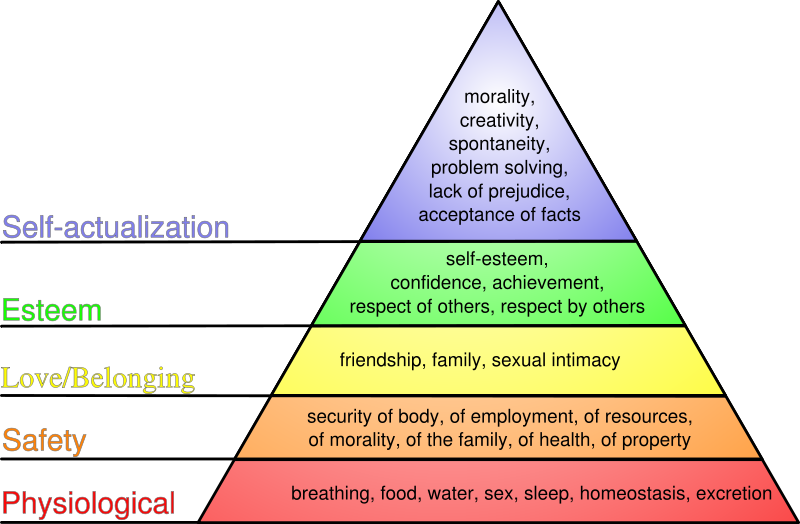
Really quickly, this pyramid created by Abraham Maslo is, as the name suggests, all about establishing the needs of people. Basically as we fulfill each level of the pyramid we move up, however the second one of the lower levels of the pyramid becomes unsatisfied (exp. the need for food and water) we fall back down the pyramid. Moving up the pyramid is tied to becoming... enlightened I'd suppose you'd say, perhaps even pursuing Being. The lower levels of the pyramid however are tied to basic instinctual needs. As those are fulfilled we may pursue higher levels of need.
Bringing this back to the relationship between thought and problems, it makes complete sense in the human mind to postpone thought on certain issues until they are unavoidable. The simple reason is out of sight, out of mind. It's much easier and less stressful to simply dismiss a plight that doesn't appear to be linked to our own. Part of this may be attributed to a lack of information about the issue, but perhaps something more. If one were to awake each morning to the harsh problems in various locations around the world it would be a quite depressing existence, especially since many of them would require a high level of thought to come to any sort of solution. When they aren't hurdles we feel relate to our own existence we don't see the point in trying to force our way over them when we can just sidestep the matter entirely.
In the film "Hotel Rwanda", the following dialogue ensues regarding footage of the genocide,
Paul Rusesabagina: I am glad that you have shot this footage and that the world will see it. It is the only way we have a chance that people might intervene.
Jack: Yeah and if no one intervenes, is it still a good thing to show? Paul Rusesabagina: How can they not intervene when they witness such atrocities?
Jack: I think if people see this footage they'll say, "oh my God that's horrible," and then go on eating their dinners.
It's malicious, disgusting and completely true. Though information is available at the push of the button, we are bombarded by so many issues that they just become white noise to us. There are exceptions to the rule of course, but, unless a problem connects to us on a personal level it is often dismissed. Why trouble yourself with sadness when it's easier to forget? That said, unavoidable problems are actually beneficial to thought because they force thought, action, solutions, while simultaneous benefiting the individual through their thought.
Never stop thinking.
#2 Defining God
"Neti, Neti ... not this, not this" - Hindu Mantra
This Mantra focuses on the fact that we cannot say what God is, though we apparently long to understand. The minute we do so, we are confining Him and therefore He is no longer God. We CAN however say what he isn't, which is where the quote comes in. The quote says, God is "not this, not this" showing things He could not be (such as the sun, a book, a blade of grass, etc), but at the same time He could be those things. This idea is confusing to me, but I think the point is that we cannot label God (and when I say God, I also mean the One Truth, Reality, etc.) however we must be open to the possibility that God can be any of these things or even all of them.
This Mantra focuses on the fact that we cannot say what God is, though we apparently long to understand. The minute we do so, we are confining Him and therefore He is no longer God. We CAN however say what he isn't, which is where the quote comes in. The quote says, God is "not this, not this" showing things He could not be (such as the sun, a book, a blade of grass, etc), but at the same time He could be those things. This idea is confusing to me, but I think the point is that we cannot label God (and when I say God, I also mean the One Truth, Reality, etc.) however we must be open to the possibility that God can be any of these things or even all of them.
 |
Not this... but could be. |
As we discussed in class, we are living in a world of becoming (constant change with many different truths), so it's interesting we try to assign labels to objects that are constantly in flux. But more than that, it's impossible for us to completely convey the world of being when it is not part of the world we live in. It would be like someone born blind trying to explain the idea of sight. It just doesn't work.
 |
Not this... but could be. |
We recently watched Baraka in class and were told to "try to find God" in the film. There were depictions of many different cultures, societies, religions, locations and was quite "artsy". Though the word baraka means "breath of life" or "blessing" there is no further indication that the film was created to depict God (no dialogue), however it was incredibly interesting to see the religions and spiritual practices throughout the world. That said, it goes a step further to demonstrate just how many interpretations of "The One" there really are.
We may never be able to define God, however it is only the Western culture that seems to have a problem with this fact. Eastern culture not only admits this, but celebrates the ambiguity of "the One." As the above quote says, we should not close ourselves off to one definition of Being, but open our eyes to all interpretations of it.
 |
| ...I really hope it's not this |
Never stop questioning!
Subscribe to:
Posts (Atom)